



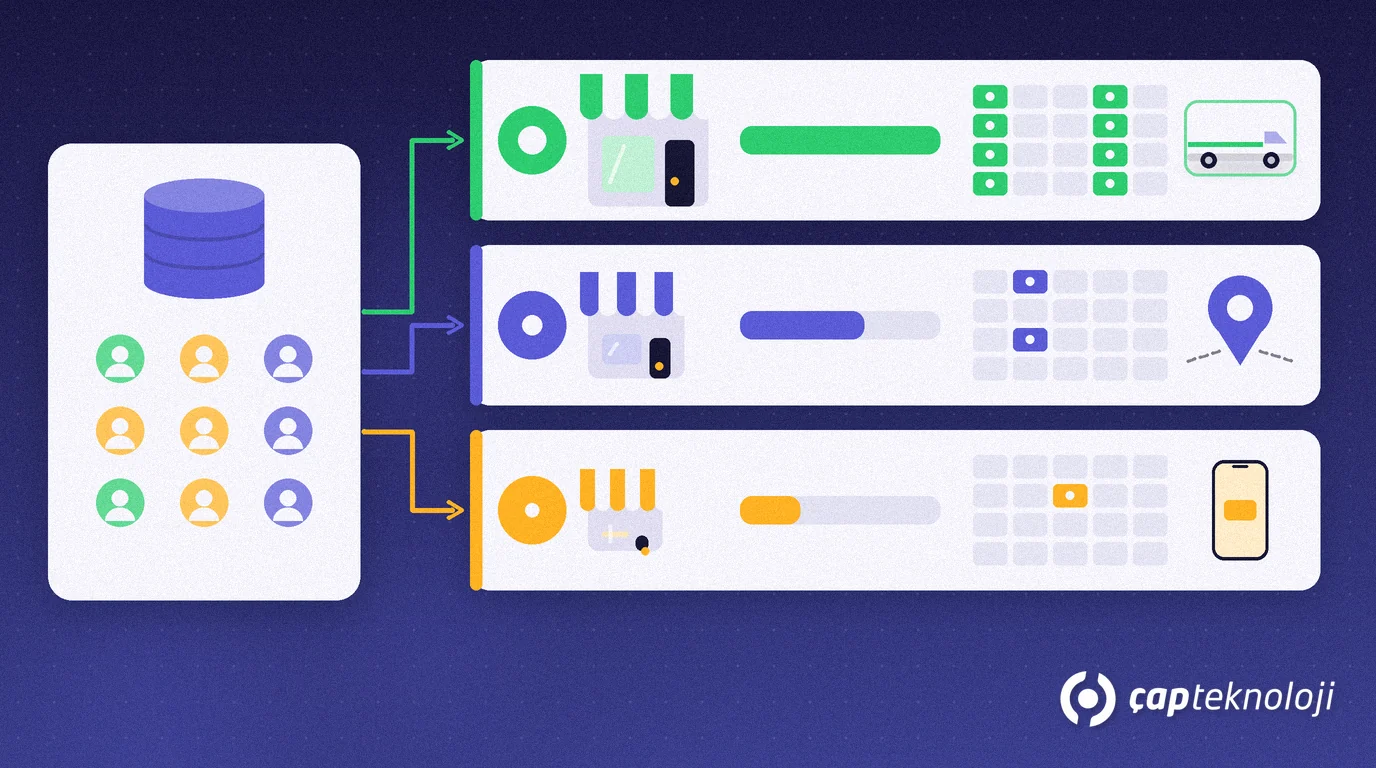
In short: ABC customer segmentation ranks customers by revenue (and ideally profit) from largest to smallest and splits them into classes A, B and C. In field sales these classes set visit frequency, route priority and service channel: A customers get frequent, planned visits, B customers regular but less frequent ones, and C customers are served mostly by phone or remote ordering.
In many SMEs, sales rep routes grow out of habit: the nearby customer, the friendly buyer or the one who calls most gets visited most. The result is that the accounts that bring the most revenue sometimes go unseen for weeks while small accounts absorb the team’s time. Because time is the scarcest resource of a field team, that imbalance turns directly into lost sales.
This article explains how to run ABC customer segmentation, choose thresholds, translate classes into visit frequency and keep them current in your field sales system.
What is ABC customer segmentation?
ABC customer segmentation builds on the Pareto principle: in most distribution and wholesale portfolios a small share of customers generates a large share of revenue. The method makes that concentration visible and gives field planning a simple shared language.
- Class A: the few customers carrying most of the revenue. Losing one is the most expensive outcome.
- Class B: mid-sized customers with growth potential.
- Class C: many customers, each with a small share of revenue.
A segment is a list of customers grouped by shared attributes; Microsoft’s Dynamics 365 Customer Insights guide to managing segments treats segments the same way, as rule-based groups that are refreshed regularly. Your ABC class should likewise be tied to a rule and recalculated on a schedule.
Why it matters in field sales
Without segmentation, the visit plan depends on personal preference. ABC classes let the sales manager and the rep answer the same question the same way: “Who must we see this week?” Keeping customer data in one place is therefore essential; see our article What is CRM? for the basics.
Segments also make risk easier to manage. A late payment or a falling order trend at an A customer must be noticed far earlier than at a C customer. Combining the class with credit limit control in field sales keeps both opportunity and risk visible on large accounts.
How to do ABC segmentation step by step
1. Prepare the data
Export net sales per customer for the last twelve months from your ERP. Deduct returns and discounts and merge multiple account cards that belong to the same company. Add gross profit if you can; a high-revenue but low-margin customer may take an A slot it does not deserve.
2. Sort and calculate the cumulative share
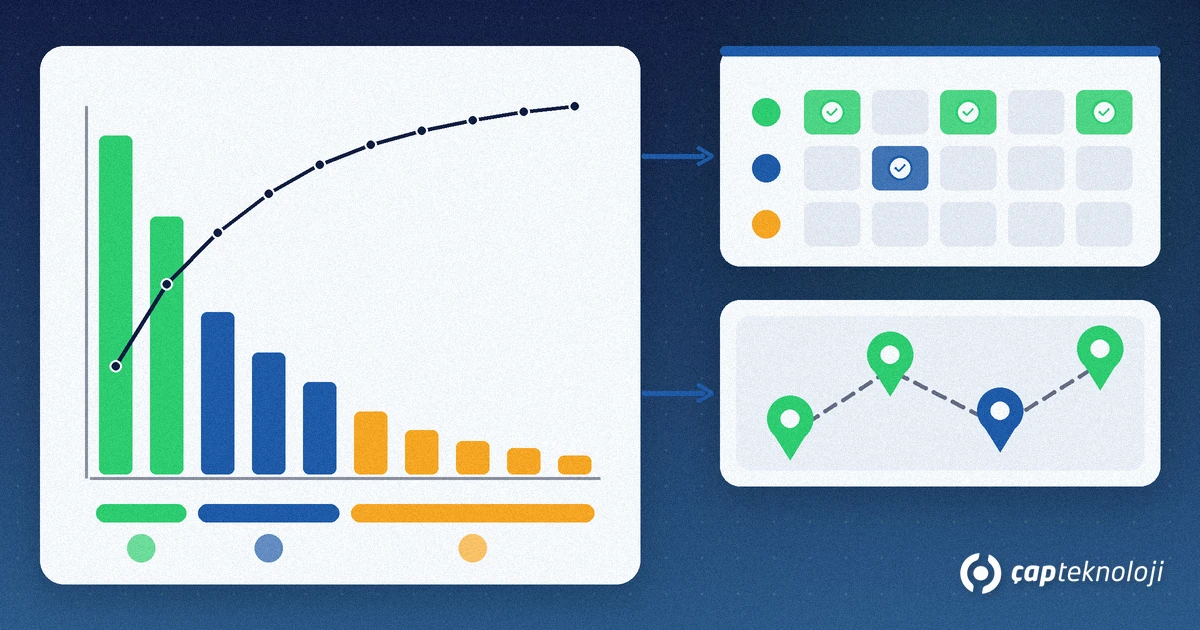
Sort customers by revenue from largest to smallest and calculate each one’s share of the total and the cumulative share. That table is your Pareto chart and shows at a glance how sharp the concentration is.
3. Set the thresholds
A common starting point is to treat roughly the first 80 percent of cumulative revenue as A, the next 15 percent as B and the rest as C. This is a starting point, not a rule; shift the thresholds to match your team’s visit capacity. Class A should never be larger than your reps can cover every week.
4. Add a second dimension
Past revenue alone can leave new, fast-growing customers stuck in C. Add a second criterion such as potential, payment behaviour or product range and flag exceptions visibly, for example “B, rising”.
5. Turn classes into visit frequency
Define a visit rhythm and channel for each class, then build routes around that rhythm. Assign each rep a weekly target mix of A, B and C visits so that the plan can be checked against what actually happened in the field.
6. Store it in the system and refresh it
Write the class into the customer record as a field and show it in the mobile app and in reports. Recalculate every quarter and list the customers whose class changed. A simple page in a Power BI dashboard is enough to track class distribution and visit compliance.
Example visit frequency and channel per class
- A customers: one or two planned visits per week on a fixed day and time, plus periodic review meetings with a manager.
- B customers: a visit every two weeks, phone follow-up in between and conversations focused on growth opportunities.
- C customers: a monthly visit or a stop when they are on the route; most orders come by phone, a B2B portal or mobile ordering.
These rhythms are examples. Shelf life, delivery frequency and competitive pressure in your sector may call for a different balance. What matters is that the decision is written down and measurable.
Common mistakes
- Looking at revenue only: low-margin or chronically late-paying customers inflate class A.
- Calculating once and forgetting: portfolios change; a yearly list is stale within six months.
- Ignoring capacity: if the A list exceeds the team’s visit capacity, the classes lose their meaning.
- Dropping C customers entirely: cutting visits before a remote ordering channel exists quietly loses revenue.
- Not explaining it to reps: if reps do not know why a customer is visited more often, routes drift back to habit.
Checklist
- Are twelve months of net sales per customer, and ideally gross profit, ready?
- Have duplicate account cards of the same company been merged?
- Have the A/B/C thresholds been tested against team capacity?
- Is a visit frequency and channel written down for each class?
- Is the class visible on the customer record and in the mobile app?
- Is there a refresh schedule and a list of class changes?
ABC customer segmentation is one of the simplest ways to point a field team’s time at the customers who create the most value. At ÇAP Teknoloji we bring the class into the customer record, the visit plan and the reports with S-Leader field sales automation. If you would like a first analysis of your own portfolio, get in touch.
Frequently Asked Questions
How often should ABC customer segmentation be refreshed?
For most SMEs a quarterly recalculation is enough. In seasonal businesses, a rolling twelve-month total smooths out the swings.
Is revenue alone enough to classify customers?
It is enough to start, but it can mislead on its own. Adding a second criterion such as gross profit, payment behaviour or growth potential keeps class A made up of genuinely valuable customers.
Should C customers stop receiving visits?
No. C customers are visited less often and most of their orders come by phone, a portal or mobile ordering. Make sure that remote ordering channel works before you cut visits.
How is the ABC class used in a field sales app?
The class is stored as a field on the customer record; visit plans, route priority and reports filter on it. When a rep opens the customer, they see the class and the target visit frequency.