



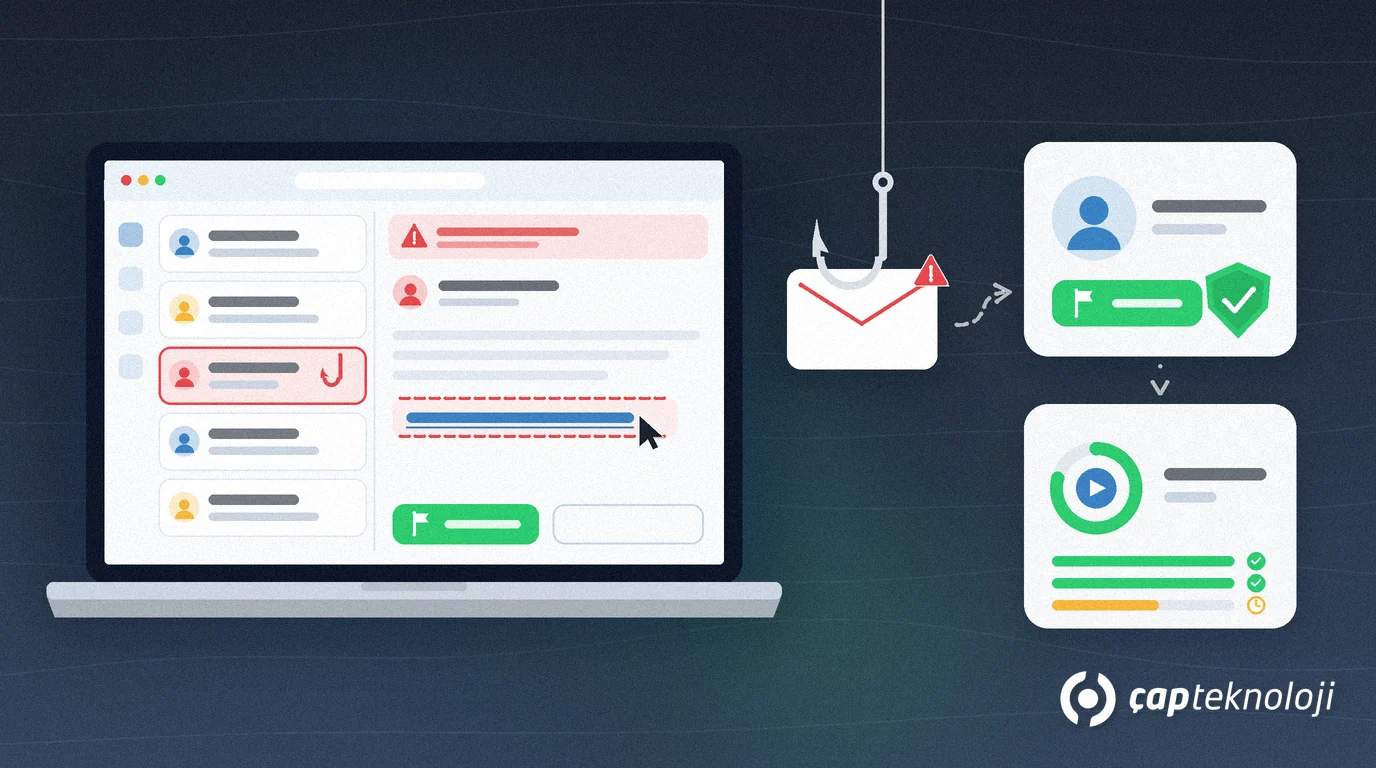
In short: To protect corporate culture and data integrity, a phishing simulation for smes should be conducted through continuous, controlled tests that educate rather than punish employees. By implementing periodic scenarios that do not disrupt daily workflows, staff can learn to detect suspicious emails early, significantly reducing the risk of a breach.
The most common method cybercriminals use to infiltrate businesses is targeting the human factor behind corporate systems. Even if firewalls, advanced filtering tools, and endpoint protection software are in place, a single careless click can leave the entire network vulnerable. Therefore, when designing cybersecurity for SMBs, technical measures must be integrated with a human defense layer.
Critical departments such as finance, accounting, and human resources handle hundreds of legitimate emails daily while being exposed to sophisticated social engineering attempts. Specifically, Business Email Compromise (BEC) cases, built around fake invoices and bank detail updates, can often bypass traditional email filters. The way to ensure internal security is not to warn employees with general presentations once a year, but to establish a continuous learning mechanism that does not hinder operational tempo.
What Is Phishing Simulation for SMEs and Why Is It Essential?
A phishing simulation is a controlled email test that mimics the tactics of real cyber attackers but contains no malicious code or data risk. The primary goal of these tests is to measure employee reflexes against phishing messages and to build the habit of reporting suspicious incidents.
SME-scale businesses often lack extensive security teams or massive budgets. However, the customer data, contracts, and trade secrets held by these businesses are just as valuable to attackers as those of large corporations. Furthermore, under the General Data Protection Regulation (GDPR) and Turkey’s Law No. 6698 (KVKK), data controllers are obliged to take technical and administrative measures to prevent unlawful processing and access to personal data. The Personal Data Protection Authority (KVKK) explicitly emphasizes increasing employee information security awareness in its technical guidelines. Simulations prevent administrative measures from remaining only on paper and help create measurable security awareness.
Steps to Building a Seamless Simulation Program
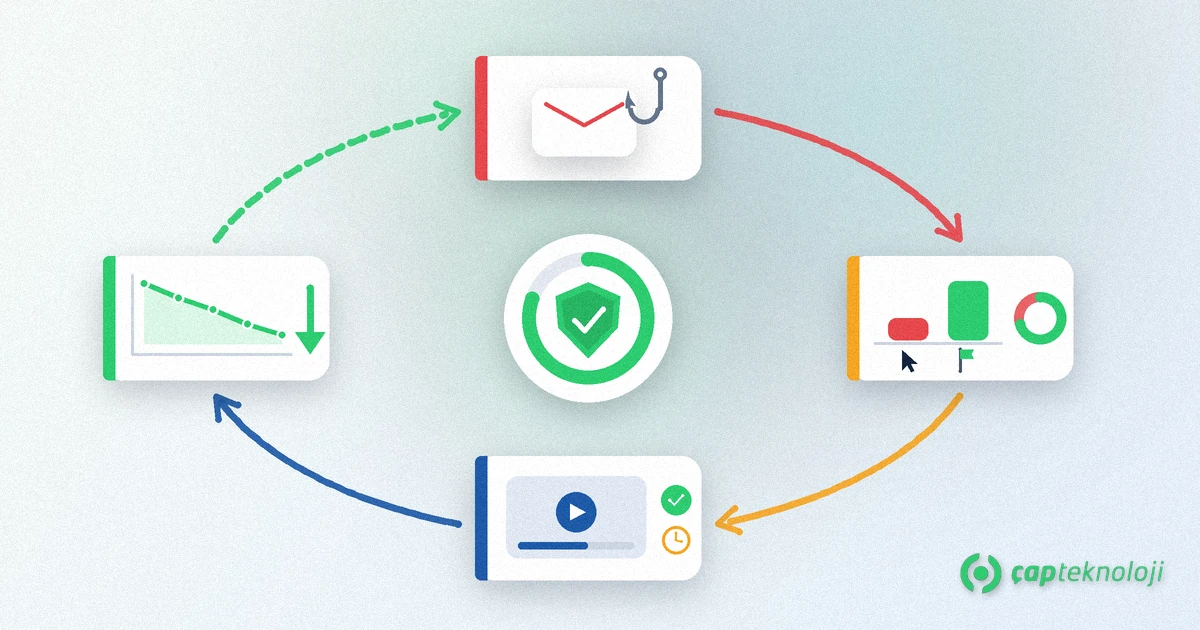
A successful awareness program must be executed without slowing down employees’ daily tasks or causing panic. To establish a continuous and efficient structure in your business, you can follow these steps:
1. Baseline Measurement and Scoping
The first stage of the program is to send a general and simple test email without prior warning to employees. This baseline test reveals the initial vulnerability rate of the company. At this stage, you determine which departments are more sensitive and which scenarios are found more convincing.
2. Gradual and Role-Based Scenario Design
Sending the same test with the same content to the entire company at once is unrealistic. Attackers prepare customized messages based on their targets. For example, while a fake payment receipt is sent to the accounting unit, simulations themed around cargo tracking notifications should be sent to field or sales teams. The level of difficulty should be increased gradually over months, encouraging employees to focus on details.
3. Just-in-Time Learning at the Moment of Click
Forcing an employee who clicks on a simulation into a long training session disrupts workflow and creates resistance. Instead, a short page should open at the moment the button is clicked, showing exactly what was missed. Minor character deviations in the sender address, illogical emphasis on urgency, and fake link structures should be conveyed through a two-minute visual explanation while the event is still fresh in the employee’s mind.
4. Creating an Easy Reporting Mechanism
The most important success criterion of an awareness program is not just a decrease in click rates, but an increase in the rate of suspicious emails reported to security officers. A one-click “Report Phishing” button integrated into email clients allows employees to take ownership of security. Threats reported internally can be cross-referenced with current malicious addresses published by organizations like the National Cyber Incident Response Center (USOM), contributing to overall network protection.
Common Pitfalls in Phishing Simulation for SMEs
Security projects started with good intentions can face employee resistance due to wrong methods. To ensure the process works efficiently, pay attention to the following traps:
- Adopting a punitive approach: Exposing staff who fail the test or threatening them with sanctions like bonus cuts leads employees to hide the situation when they make a mistake. Security culture should be built on learning, not fear.
- Neglecting technical controls: Awareness training alone is not enough to close technical infrastructure gaps. If email security records (SPF, DKIM, DMARC) are missing, human errors become inevitable. To ensure full security, the security of server and network infrastructure should also be reviewed regularly.
- Overly complex or infrequent tests: Testing once or twice a year does not build reflexes. Ideally, controlled mailings should be done in monthly or bi-monthly periods to keep employee attention sharp.
Checklist for an Effective Phishing Simulation for SMEs
Practical steps that SME management should review before starting the simulation process include:
- Clarify management support: Announce through a written security policy that company management will use test results to increase corporate resilience, not for punishment.
- Prepare IT infrastructure for tests: Define necessary IP and domain exceptions on test servers so that simulation emails are not blocked by corporate filters.
- Perform department-based risk analysis: Prepare more sophisticated simulations for high-risk units such as finance, procurement, and HR.
- Provide short and focused feedback: Without blaming users who make mistakes, share educational tips at the exact moment the error occurs.
- Review progress reports regularly: Update your training strategy by tracking the decline in click rates over time and the increase in reporting rates.
The protection of digital assets and corporate reputation depends on the harmony between technology investments and employee behavior. At ÇAP Teknoloji, we offer continuous phishing tests, awareness programs, and infrastructure security support within the scope of Cybersecurity Consulting tailored to your business needs. You can contact us to close your business’s security gaps and prepare your personnel against cyber threats.
Frequently Asked Questions
How often should phishing simulation tests be conducted?
To keep employee reflexes sharp in SMEs, it is recommended to repeat simulations periodically every month or at least every two months. Tests conducted only once a year are easily forgotten and fail to make corporate security behavior permanent.
Should sanctions be applied to an employee who clicks a fake link in a simulation test?
No, a punitive approach causes employees to hide cyber threats and dulls their defensive reflexes. The goal of the tests is not to blame, but to ensure that personnel realize their mistakes through micro-content provided instantly.
Do phishing simulations help meet GDPR and KVKK requirements?
Yes, under GDPR and Law No. 6698 (KVKK), providing training to increase employee awareness is among the administrative measures data controllers must take. Regular simulations document that the company is improving data security awareness in a measurable way.
Does a simulation program slow down the company’s daily operations?
A correctly structured program does not disrupt the business tempo. Since employees who make a mistake are only shown 1-2 minutes of visual warnings, behavioral transformation is achieved without significant loss of working hours.